
Discover Temple-Style Puliyogare
“A Taste Rooted in Tradition”
$IPC Heritage Team
Heritage Preservation
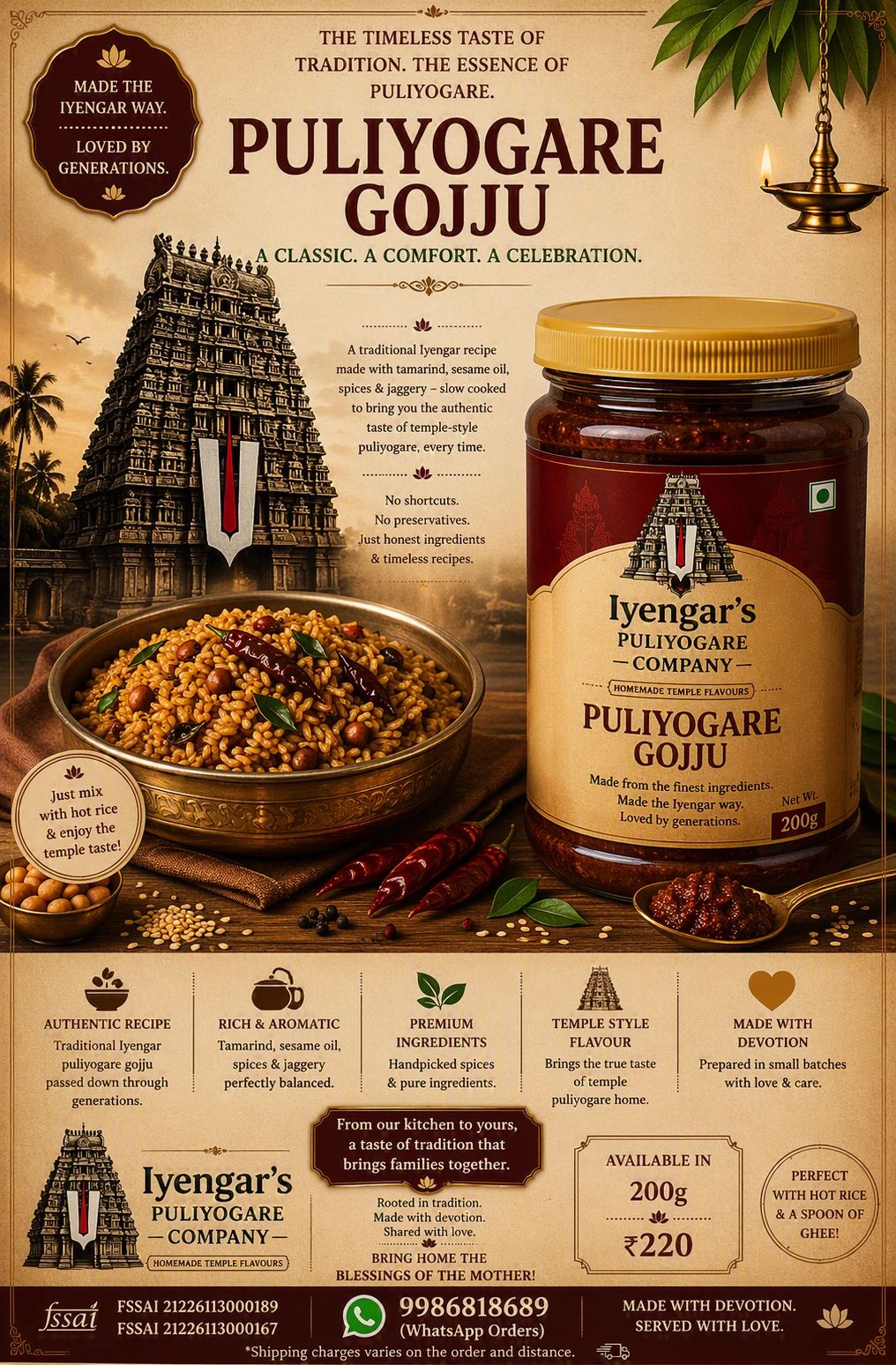
Temple-style cuisine has long been the guardian of South India's most authentic flavors, where every spice blend and preparation follows time-honored rituals perfected over generations. This culinary tradition, deeply tied to temple kitchens of Tamil Nadu and Karnataka, emphasizes purity, balance, and aroma—qualities that still define exceptional South Indian meals today. One such beloved dish, Puliyogare—a tangy, tamarind-infused rice preparation—is more than a meal; it's a sacred offering turned household staple, celebrated for its bold taste and nourishing qualities.
Understanding the heritage behind temple-style cooking helps home chefs and food enthusiasts alike elevate their daily meals with authenticity. The use of roasted lentils, hand-ground masalas, and natural souring agents like tamarind isn’t just about flavor—it's about intention. Preparation methods focus on freshness, seasonality, and minimal processing, ensuring each bite remains close to its roots.
In this guide, you’ll explore how traditional spice blends are crafted, what sets temple-style Puliyogare apart from ordinary recipes, and practical ways to incorporate these time-tested techniques into your own kitchen. Discover how ancestral wisdom meets modern taste, one aromatic bite at a time.
Mastering Authentic Temple-Style Puliyogare: A Step-by-Step Guide
Crafting true temple-style Puliyogare begins with precision and respect for time-honored techniques. This tangy, spicy rice dish originates from South India’s temple kitchens, where flavor balance and ritual purity are paramount. Follow these steps to replicate the authentic experience at home.
Prepare the Rice Base
Use aged, non-basmati South Indian rice like Ponni or Sona Masuri. Cook it slightly drier than usual—overly soft rice won’t absorb the tamarind paste evenly. Cool completely before mixing to prevent mushiness.
Make the Tamarind Paste
Soak a lemon-sized tamarind ball in warm water for 20 minutes. Extract the pulp thoroughly, discarding seeds and fibers. The key is a smooth, rich concentrate—this forms the soul of your Puliyogare.
Temper the Spice Blend
Use freshly roasted lentils (toor dal, chana dal), dried red chilies, fenugreek, and asafoetida. Dry roast until golden, then cool and grind into a fine podi (spice powder). This temple-style masala delivers depth and digestive benefits.
Combine with Precision
Mix cooled rice with the tamarind paste and spice powder in graduated stages. Add jaggery or sugar for balance, and season with salted roasted peanuts for crunch.
In Bengaluru’s traditional kitchens, the final mix is often rested for 2–3 hours to deepen flavor integration. Store in an airtight container for up to a week—flavors mature beautifully.
7 Key Ingredients That Make It Exceptional
What separates an ordinary tamarind rice from an authentic temple-style Puliyogare experience? It's all in the ingredients. Rooted deeply in South Indian culinary tradition and perfected over centuries in temple kitchens, this iconic dish relies on a precise blend of components that deliver layered, balanced flavor.
1. Sun-Dried Tamarind Pulp
Forms the backbone of true Puliyogare. Unlike commercial concentrates, naturally dehydrated pulp retains nuanced flavor notes and contributes a smoother sour profile.
2. Stone-Ground Coriander & Fenugreek
Freshly ground seeds provide earthiness and subtle bitterness. The stone-grinding process preserves essential oils, enhancing aroma.
3. Roasted Red Chilies with Terroir
Byadgi or Kashmiri varieties deliver vibrant color and deep, smoky heat without excessive spice, honoring regional sourcing traditions.
4. Mustard & Fenugreek Tempering
Tempering (tadka) unlocks aromatic complexity and enhances digestibility, a hallmark of temple cuisine focused on wellness.
5. Freshly Crushed Asafoetida (Hing)
High-quality, resin-rich asafoetida is critical for umami depth. Its pungent aroma mellows beautifully when cooked.
6. Curry Leaves from Local Farms
Fragrant, hand-plucked leaves add citrusy aroma and enhance the dish’s sattvic (pure) quality.
7. Jaggery from Sustainable Sugarcane
Unrefined jaggery balances sour and spicy notes naturally, offering molasses-rich sweetness and mineral depth.
Frequently Asked Questions
Q: What does 'fresh-on-order' mean?
Fresh-on-order means products are prepared only after an order is placed, not mass-produced. This ensures peak flavor, maximum aroma retention, and optimal shelf life.
Q: How long do fresh puliyogare mixes stay good?
Stored in an airtight container in a cool place, they last 2–3 weeks. Refrigeration can extend freshness up to 4 weeks.
Q: Are temple-style spice mixes naturally preserved?
Yes—traditional preparation uses natural preservatives like sun-dried tamarind, roasted lentils, and high-purity oil content to enhance longevity without chemicals.
Q: What makes temple-style different from regular mixes?
They follow strict sattvic principles—no onions or garlic—and emphasize ritual cleanliness, specific roasting temperatures, and hand-ground textures.
Savor the Soul of Tradition in Every Bite
Temple-style Puliyogare is more than a tangy rice dish—it's a testament to generations of culinary wisdom passed down through South Indian kitchens. What sets authentic Puliyogare apart isn't just the recipe, but the intention: slow preparation, fresh ingredients, and respect for time-honored techniques that can't be rushed.
If you're seeking to bring this homemade goodness into your kitchen, start by evaluating your current ingredients. Are your masalas freshly ground? Is the tamarind pulp natural and free from preservatives? Small shifts toward authentic components can transform your meals.
Embrace the rhythm of slow cooking and mindful preparation. By choosing quality over convenience, you're not just making a meal—you're honoring a heritage. Start your journey toward true temple-style flavors today, one grain at a time.